



Closing the windows doesn’t necessarily keep outdoor pollutants and irritants out of your living space. Dust, pollen, pet dander, cleaning products, excess moisture, and particles brought indoors can all contribute to the air circulating through your home, often without obvious signs.
Improving indoor air quality Atlanta homeowners experience requires looking at more than a single filter or air-cleaning product. Ventilation, humidity control, HVAC maintenance, filtration, source control, and regular cleaning can all influence the concentration of airborne contaminants inside a home.
Atlanta’s humid climate and seasonal allergens can add another layer to the challenge. Understanding where indoor air quality problems originate and which improvements address them can help homeowners create a cleaner, more comfortable indoor environment without relying on one-size-fits-all solutions.
Indoor Air Quality Atlanta Tips for Reducing Dust and Allergens
Why Is Atlanta So Challenging for Indoor Air Quality?
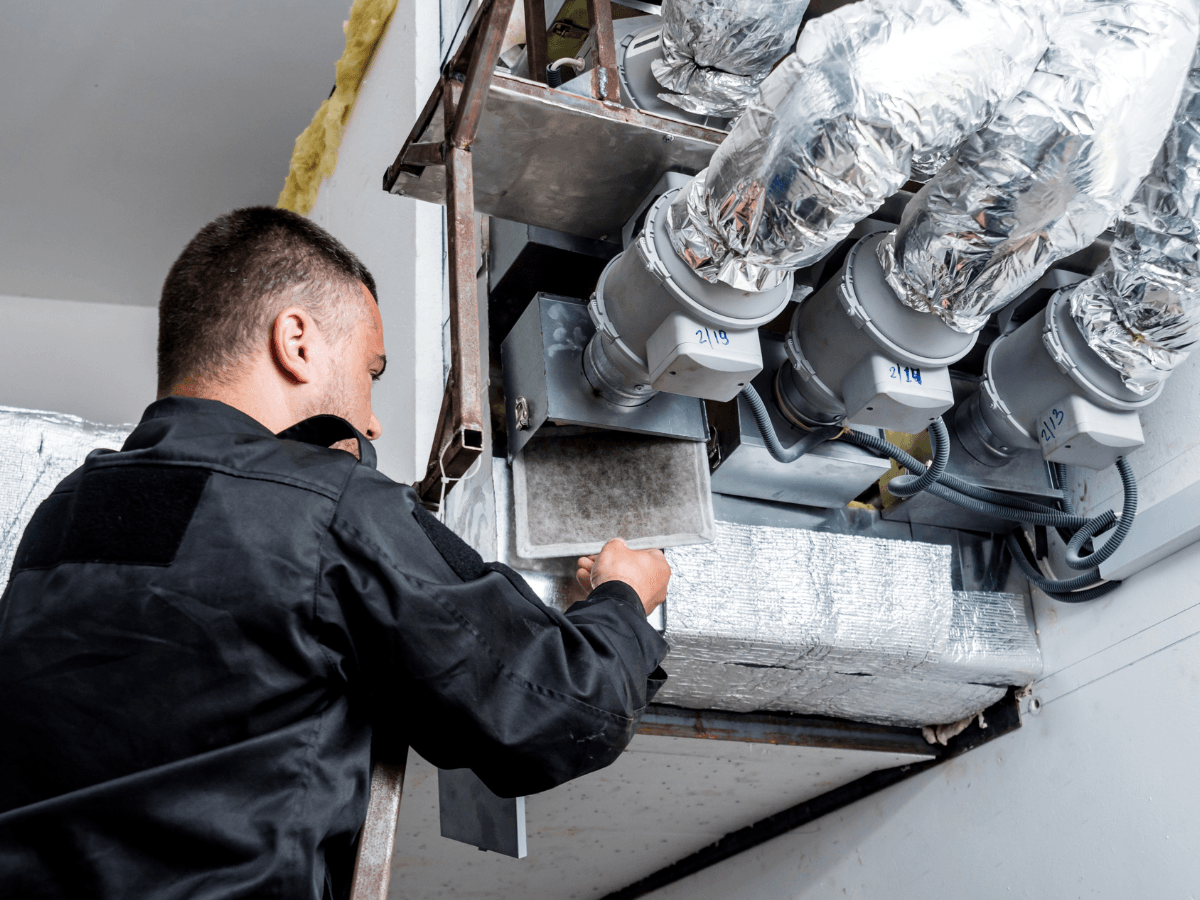
Atlanta’s long cooling season, humid weather, heavy seasonal pollen, and frequent use of air conditioning can create a demanding environment for indoor air quality. The outdoor climate is only part of the equation, though. What happens inside the house matters just as much.
Pollen can enter through open doors and windows or be carried indoors on clothing, shoes, and pets. Dust, pet dander, cooking particles, cleaning products, and other indoor pollutants have their own sources.
Moisture from showers, cooking, plumbing leaks, damp crawl spaces, and everyday household activity can add another layer of concern.
For homeowners researching indoor air quality Atlanta conditions make especially important, the goal should be to manage the individual sources rather than assume every problem comes from outdoor humidity.
Why Can Indoor Air Feel Worse Than the Air Outside?
A house can accumulate pollutants from both indoor and outdoor sources. Once particles enter, they may settle into carpeting, upholstery, bedding, and other surfaces or continue circulating through the home.
Keeping windows closed during hot weather may reduce some outdoor pollen intrusion, but it also makes mechanical ventilation, filtration, and HVAC operation more important. Indoor activities such as cooking, burning candles, cleaning, and using certain household products can add particles or gases of their own.
That is why better indoor air quality usually requires more than one solution. Source control, adequate ventilation, moisture management, and appropriate filtration each address a different part of the problem.
Homeowners dealing primarily with seasonal allergens may benefit from understanding how HVAC filtration can help manage pollen, dust, pet dander, and other allergens rather than expecting the air conditioner alone to remove everything from the air.
How Does Atlanta Humidity Affect Indoor Air?
Outdoor humidity does not automatically determine the humidity inside a home, but Atlanta’s warm, humid conditions can make moisture control more important during much of the cooling season.
Excess indoor moisture can encourage mold growth on damp materials and support dust mite populations. Condensation on windows, ducts, pipes, or other cool surfaces can also indicate that moisture levels are too high or that another building or HVAC issue needs attention.
The EPA recommends keeping indoor relative humidity below 60% and ideally between 30% and 50%. That range is a useful target rather than a rigid rule for every moment of the year.
A basic hygrometer can tell homeowners far more than guessing from how the room feels. Persistent readings outside the desired range provide a clearer reason to investigate ventilation, moisture sources, HVAC operation, or dehumidification.
For a closer look at the relationship between humidity, allergens, and respiratory comfort, it helps to distinguish excessive moisture from other indoor air concerns instead of treating them as the same problem.
Can Your HVAC System Affect Indoor Humidity?
Yes. During cooling operation, an air-conditioning system removes some moisture as warm indoor air passes over the cold evaporator coil. The resulting condensate drains away from the system.
How effectively that happens depends on more than the age of the equipment. System sizing, runtime, airflow, thermostat settings, equipment condition, condensate drainage, and the amount of moisture entering the home can all influence indoor humidity.
An oversized air conditioner, for example, may cool a house quickly enough that it does not run long enough to remove as much moisture as desired. Poor airflow or maintenance problems can create different performance issues.
Because local weather places changing demands on heating and cooling equipment throughout the year, understanding the effect of climate and humidity on HVAC performance can help homeowners separate normal seasonal changes from problems that deserve closer attention.
What Signs Suggest Indoor Humidity Is Too High?
A humidity reading is the clearest starting point, but the house may provide other clues. Persistent moisture problems can show up as:
- Condensation on windows or cool surfaces
- Musty odors
- Damp-feeling rooms or materials
- Repeated mold growth in moisture-prone areas
- Excess moisture around ducts or vents
- A home that feels clammy even at a comfortable temperature
These signs do not automatically prove that the HVAC system is responsible. Plumbing leaks, bathroom ventilation, cooking, crawl-space moisture, roofing problems, drainage, and other sources may need to be investigated.
Can HVAC Maintenance Help With Indoor Air Quality?
HVAC maintenance cannot solve every indoor air problem, but it can help keep the equipment responsible for moving and conditioning air operating as intended.
Filters need to fit correctly and be replaced or cleaned at appropriate intervals. Condensate drains should remain clear, and coils and blower components should be inspected when necessary. inAir’s preventive HVAC maintenance includes filter and condensate-related service depending on the maintenance plan selected.
Homeowners should still think beyond the equipment itself. Improving indoor air quality Atlanta homes can be maintained consistently and may involve reducing pollutant sources, controlling moisture, using ventilation appropriately, selecting suitable filtration, and addressing water or mold problems at their source.
The important distinction is that humidity, pollen, dust, and HVAC performance are related, but they are not interchangeable problems. Identifying which one is actually affecting the home leads to a much more useful solution than treating every indoor air complaint as a filtration issue.
What’s Actually Polluting the Air Inside Your Home?
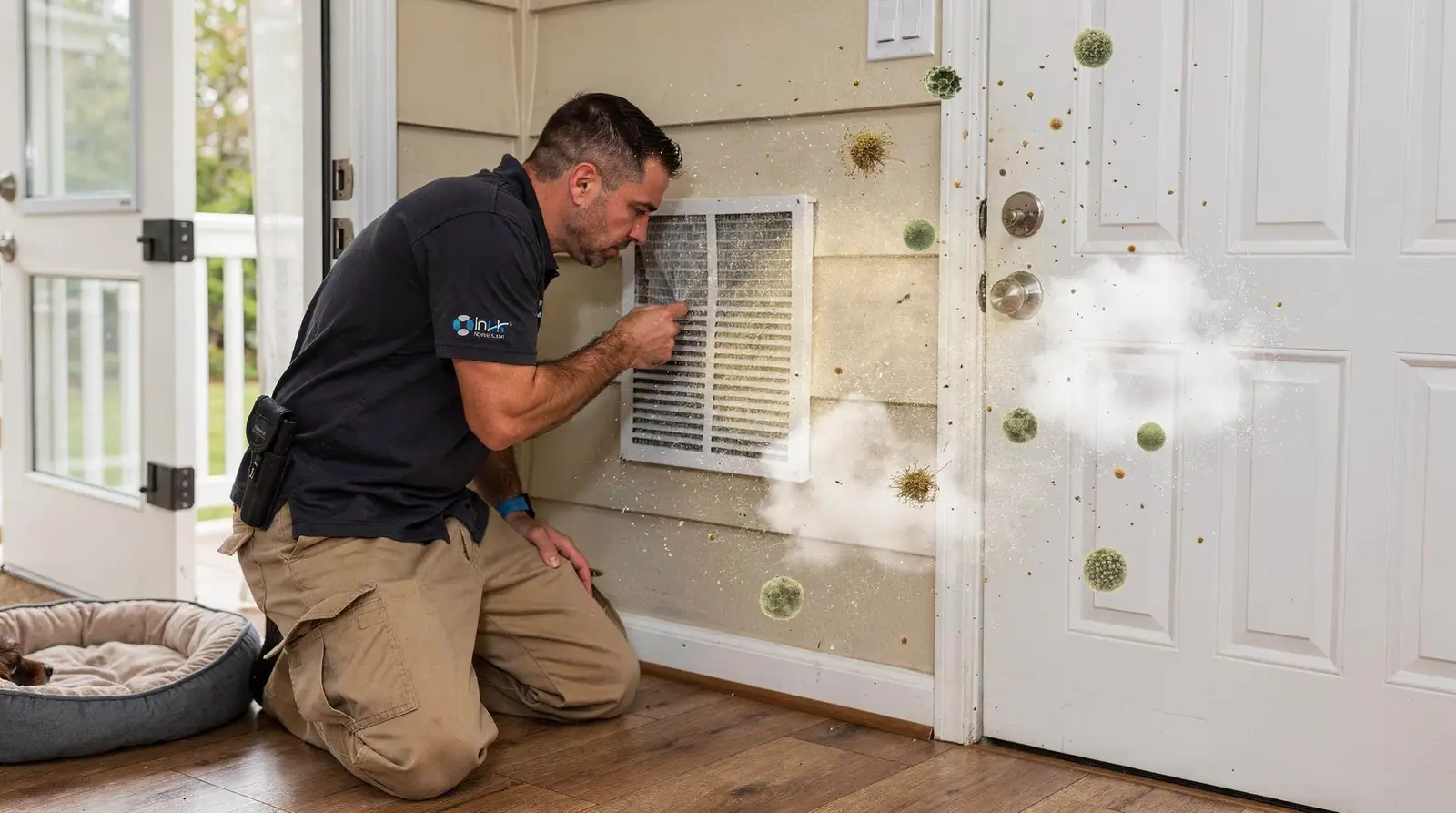
Poor indoor air quality rarely comes from one source. Pollen, pet dander, mold spores, and outdoor dust can make their way inside, but the home itself also generates particles and gases through cooking, cleaning, burning candles, using certain household products, and everyday activity.
For homeowners concerned about indoor air quality Atlanta conditions can make seasonal allergens especially noticeable, but pollen is only one part of the picture.
The more useful approach is to identify whether the problem comes primarily from outdoor allergens, moisture, household activities, pets, filtration, or another source.
Which Outdoor Pollutants Make Their Way Indoors?
Pollen, soil, dust, and other outdoor particles enter homes through open doors and windows and can also be carried inside on clothing, shoes, and pets.
Once indoors, those particles can settle into rugs, furniture, bedding, and other surfaces. Walking, vacuuming, dusting, or disturbing fabrics can send some settled material back into the air.
During periods of heavy pollen, keeping windows closed may reduce how much enters directly from outside. Changing clothes after extended outdoor activity, removing shoes near the entrance, and cleaning surfaces regularly can also reduce accumulation.
What Pollutants Originate Inside the Home?
Not every indoor air problem starts outdoors. Several common pollutants are produced or released inside the house.
These can include:
- Dust and skin flakes that accumulate on surfaces
- Pet dander and allergens from saliva
- Particles generated during cooking
- Smoke and particles from candles, fireplaces, or tobacco
- Volatile organic compounds from paints, cleaners, furnishings, and some household products
- Mold associated with moisture or water damage
- Dust mite and pest allergens
This distinction matters because filtration alone cannot control every pollutant. A particle filter may help capture airborne dust or dander, but it cannot repair a plumbing leak, eliminate the source of a chemical vapor, or replace proper kitchen and bathroom ventilation.
How Do Pets Affect Indoor Air Quality?
Pet hair is visible, but dander is generally a more important airborne allergen. Dander consists of tiny flakes of skin that can remain suspended in the air or settle into carpets, bedding, furniture, and other fabrics.
Hair can also carry dander, pollen, and dust around the home. Households with pets may therefore find that filters load more quickly, particularly during periods of heavy shedding.
Regular grooming, vacuuming, washing pet bedding, and checking HVAC filters more frequently can help reduce buildup. More detailed HVAC strategies for homes with pets can also help homeowners balance particle capture with the airflow their system needs.
Does Mold in the Air Always Mean the HVAC System Is the Problem?
No. Mold requires moisture, so the first question should be where that moisture is coming from.
Bathrooms, basements, roof or plumbing leaks, damp building materials, crawl spaces, and condensation can all create conditions that support mold growth. HVAC components can also develop moisture problems under certain conditions, particularly around cooling equipment and condensate drainage.
If mold appears repeatedly, controlling the source of moisture is more important than simply replacing filters or treating the air. Cleaning visible growth without correcting the underlying water problem allows the same conditions to return.
Does Dust in Air Ducts Mean You Need Duct Cleaning?
Not necessarily. Dust around a return grille or inside accessible ductwork does not automatically mean the ducts are significantly contaminating indoor air.
Routine duct cleaning is not a universal solution for dusty homes. It may deserve consideration when there is substantial visible contamination, pest infestation, or excessive debris being released from supply registers.
Before assuming the ducts are responsible, look at more common sources such as household dust, pets, filtration, air leaks, carpeting, and everyday activities. Regular HVAC maintenance for Atlanta homes can also help identify clogged filters, drainage issues, dirty components, or airflow problems that may need attention.
Why Does Dust Return So Quickly After Cleaning?
Fast-returning dust does not necessarily indicate an HVAC failure. Indoor dust is a mixture of material from many sources, including outdoor soil, pollen, fibers, skin flakes, pet allergens, cooking particles, and household products.
Normal movement through the home can repeatedly disturb particles that have already settled. If dust seems excessive, check the basics first: filter condition, fit around the filter frame, housekeeping frequency, pet shedding, open-window use, and whether renovations or other activities are producing additional particles.
Can Better Filtration Solve Every Indoor Air Problem?
No. Filtration is useful for particles that actually pass through the HVAC system, but indoor air quality is broader than particle capture.
Better indoor air quality Atlanta homeowners can maintain consistently often requires several strategies working together: reducing pollutants at their source, controlling moisture, ventilating where needed, cleaning settled dust, and using filtration appropriate for the HVAC system.
The right solution therefore depends on what is actually in the air. A pollen problem, moisture problem, pet-allergen problem, and chemical-odor problem may all feel like “bad air,” but they require different responses.
Can Opening Windows Help or Hurt During Pollen Season?
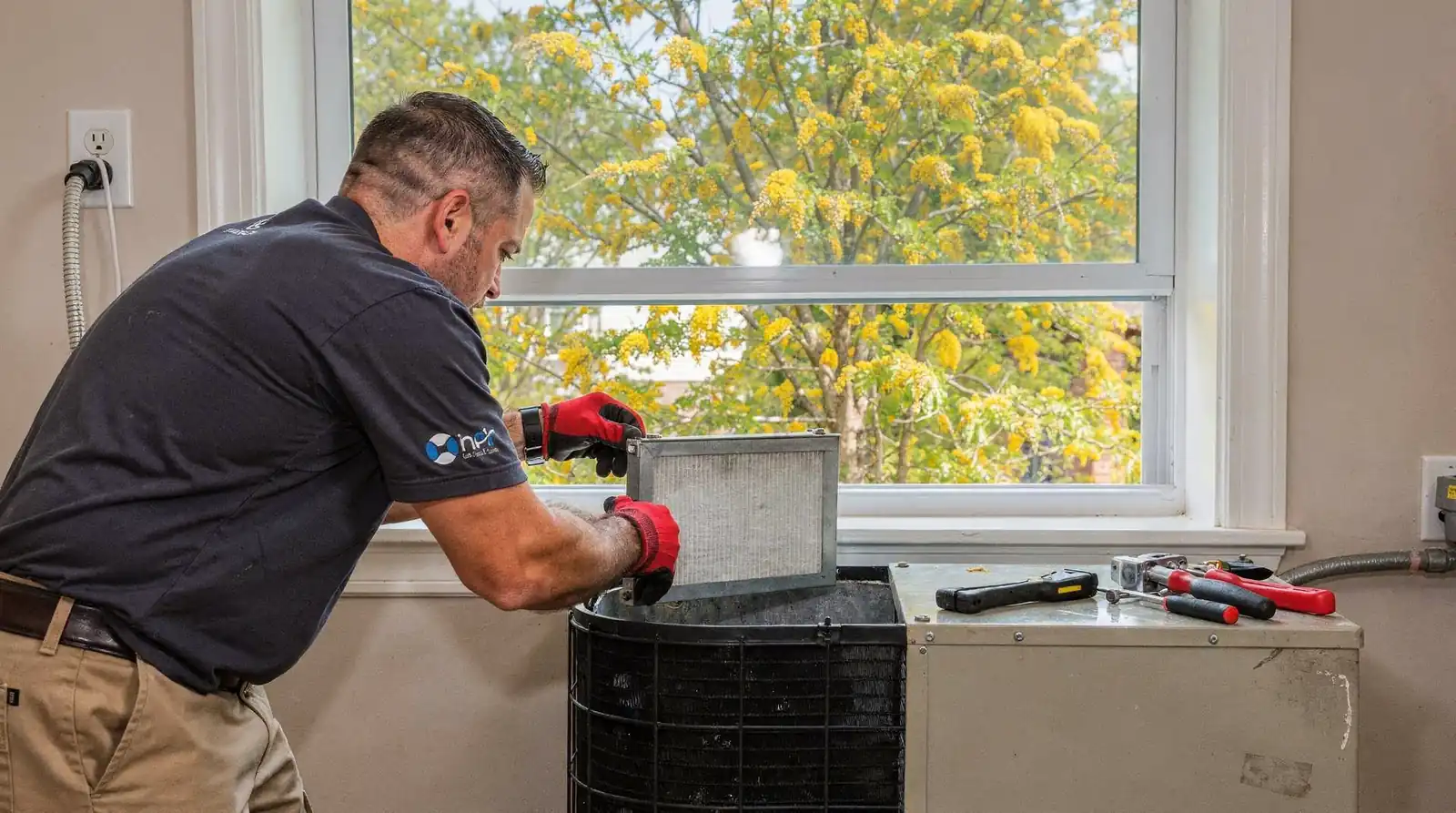
Opening windows can improve ventilation when outdoor air is clean, but during a high-pollen day it can also bring more allergens directly into the house.
For homeowners trying to protect indoor air quality Atlanta pollen season makes timing important. Instead of treating open windows as always good or always bad, check outdoor conditions first.
When pollen counts are elevated, keeping windows closed can reduce one major pathway for outdoor allergens to enter. When pollen and outdoor pollution are low, and weather conditions are comfortable, short periods of natural ventilation may still be useful.
When Should You Keep the Windows Closed?
Closing windows makes the most sense when pollen or outdoor particle pollution is high.
EPA guidance specifically recommends keeping windows closed on high-pollen days because outdoor particles can enter through open doors and windows and become part of the indoor particle load.
Atlanta homeowners may also want to limit open-window ventilation when:
- Pollen counts are elevated
- Outdoor air quality is poor
- Nearby smoke or construction dust is present
- Outdoor humidity is high enough to create an indoor moisture problem
- Someone in the household is especially sensitive to seasonal allergens
Screens are useful for insects, but they are not designed to block most airborne pollen from entering a home.
Is Running the Air Conditioner Better Than Opening a Window?
During high-pollen conditions, using a central HVAC system with an appropriate filter can help reduce airborne particles without opening the house directly to outdoor allergens.
That does not mean the air conditioner removes everything from the air. HVAC filters only capture particles that actually pass through the return system, and filtration effectiveness depends on filter efficiency, fit, system airflow, and how often the equipment operates.
The EPA generally recommends using the highest-efficiency HVAC filter the system can accommodate, with MERV 13 as a useful target where the equipment supports it.
A filter that is too restrictive for the system can create airflow problems, so homeowners should not assume that simply choosing the highest MERV number on the shelf is always better.
For a broader look at improving indoor air quality in Atlanta homes, filtration works best as one part of a larger strategy that also includes source control, moisture management, and appropriate ventilation.
Should You Run the HVAC Fan Continuously for More Filtration?
Not automatically. Running the blower for longer periods can move more air through the filter, which may increase particle removal. However, longer fan operation also uses more electricity and may not be the best strategy for every HVAC system.
EPA guidance notes that extended operation purely for filtration may be impractical and can affect humidity control during the cooling season in some homes.
A better approach is to use the system normally, keep the filter clean, make sure it fits properly, and consider a portable air cleaner if one room needs more continuous filtration.
Can a Portable Air Purifier Help During Peak Pollen Weeks?
Yes, particularly in bedrooms, living rooms, or other areas where people spend a lot of time. Portable air cleaners work independently from the central HVAC system, so they can filter room air continuously rather than waiting for the heating or cooling equipment to cycle on.
For particle removal, HEPA filtration is one of the most established options. EPA guidance notes that true HEPA filters are designed to capture at least 99.97% of particles at the test size of 0.3 microns.
Room size matters, though. A purifier should have enough clean-air delivery capacity for the space rather than being selected only by brand or filter type.
What Else Helps Keep Pollen Out of the House?
Reducing what enters the house in the first place can be just as useful as trying to filter it afterward.
During heavy pollen periods:
- Remove shoes near the entrance
- Change clothes after extended time outdoors
- Wash bedding regularly
- Wipe surfaces with a damp cloth instead of dry dusting
- Vacuum rugs and upholstered furniture routinely
- Keep pets groomed if they spend time outside
- Check HVAC filters more frequently during periods of heavy use
Filters should be replaced according to the manufacturer’s guidance and actual condition. A heavily loaded filter can restrict airflow, while a poorly fitted filter may allow air to bypass the media.
Seasonal HVAC filter and maintenance checks can also help homeowners verify that filtration and airflow are working together rather than assuming a higher-rated filter alone will solve the problem.
When Is It Okay to Open the Windows Again?
There is no need to keep a house sealed throughout the entire pollen season. Check local pollen levels, outdoor air quality, humidity, and weather conditions. A lower-pollen morning or a day after rainfall may offer a better opportunity for natural ventilation than a dry, windy afternoon when pollen is circulating heavily.
The best approach to indoor air quality Atlanta homeowners can use during allergy season is flexible. Keep outdoor allergens out when conditions are poor, ventilate when outdoor air is genuinely cleaner, and use filtration to supplement those choices rather than expecting any single strategy to do all the work.
What Role Do Air Filters and Purifiers Play?
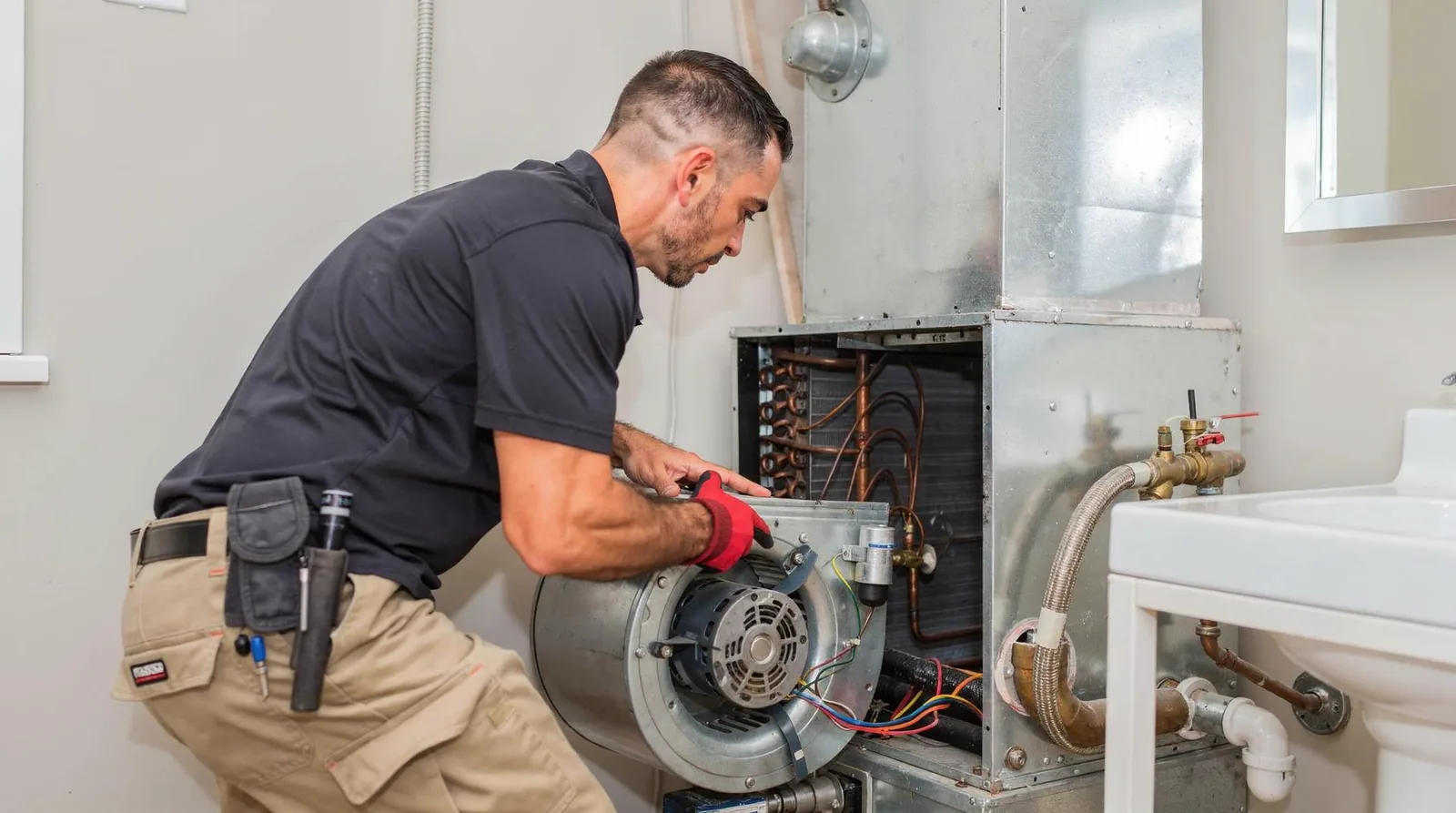
Air filters and air purifiers can both improve particle control, but they do different jobs. A central HVAC filter captures particles as air moves through the heating and cooling system.
A portable air purifier treats the air in a specific room, while some whole-home systems add higher-capacity filtration or other air-cleaning technologies to the ductwork.
For homeowners evaluating indoor air quality Atlanta homes can maintain more consistently, the first step is identifying what they are trying to remove.
Pollen and pet dander call for particle filtration. Odors and some gases may require activated carbon or another gas-phase technology. Excess humidity needs moisture control, not a stronger filter.
How Do HVAC Filters Work?
A central HVAC filter sits in the return-air path and captures particles before air passes through the equipment and returns to the living space.
Filter efficiency is commonly described using a MERV rating. Higher MERV ratings generally capture smaller particles more effectively, but the highest-rated filter is not automatically the right choice for every system. A filter that creates too much resistance can reduce airflow.
EPA guidance recommends considering a MERV 13 filter, or the highest efficiency the system can accommodate, when improved filtration is a priority. Homeowners who are unsure what their equipment can handle should check the manufacturer’s specifications or have airflow and filter compatibility evaluated.
Routine HVAC tune-up checks can also help identify filter-fit, airflow, coil, and condensate issues that affect overall system performance.
What Is the Difference Between a MERV Filter and a HEPA Purifier?
MERV-rated filters are most commonly used in central HVAC systems. HEPA filtration is more common in portable room air cleaners and specialized filtration systems.
True HEPA filters are designed to capture at least 99.97% of particles at 0.3 microns under the standard test definition. That makes them highly effective for airborne particles such as pollen, fine dust, and some pet allergens.
The practical limitation is airflow. Most residential HVAC systems are not designed to accept a true HEPA filter directly in a standard one-inch filter slot. Portable HEPA air cleaners can therefore be a useful option for bedrooms, living rooms, or other high-use areas without changing the central system.
When Is a Portable Air Purifier Useful?
Portable purifiers make the most sense when the goal is targeted cleaning in one or two rooms.
They are particularly useful when:
- Someone spends long periods in a bedroom or home office
- A household member is sensitive to pollen or pet dander
- The central HVAC system cannot accommodate a higher-efficiency filter
- Additional particle removal is needed without modifying ductwork
Room size matters. A purifier should be selected according to its clean air delivery rate rather than simply its physical size or brand.
Portable units also need clear airflow around the intake and outlet. Placing one behind furniture or curtains can reduce how effectively it circulates room air.
When Does Whole-Home Filtration Make Sense?
Whole-home filtration may be worth considering when homeowners want broader particle control across multiple rooms and already rely heavily on a central HVAC system.
Some systems use deeper media filters that provide more surface area than a basic one-inch filter. Others add separate air-cleaning components within the duct system.
The important question is not whether a whole-home product sounds more advanced. It is whether the equipment is compatible with the existing blower, ductwork, and airflow requirements.
If the HVAC system itself is being replaced, system installation planning is a logical time to discuss filtration capacity because filter cabinets, return-air sizing, and airflow can be considered together rather than retrofitted afterward.
What Does UV Air Treatment Actually Do?
UV systems serve a different purpose from particle filters. Ultraviolet germicidal technology may be used around HVAC coils or within ductwork to help control certain microorganisms under appropriate conditions. It does not physically capture pollen, pet dander, or household dust.
That distinction is important. A homeowner whose main concern is spring pollen will generally get more direct benefit from appropriate filtration than from UV alone. UV and other electronic air-cleaning technologies also require careful product selection.
EPA cautions that some ionizers, electrostatic devices, plasma systems, and improperly designed UV products can produce ozone, which is a respiratory irritant. Devices that intentionally generate ozone should not be used in occupied spaces.
Can an Air Purifier Fix Mold or High Humidity?
No. Air cleaning can capture some airborne particles associated with mold, but it cannot correct the moisture problem that allowed mold to grow.
Likewise, neither a stronger HVAC filter nor a portable purifier removes significant moisture from indoor air. Persistent humidity may require better ventilation, HVAC correction, dehumidification, or repair of the underlying moisture source.
This is one of the most important distinctions in indoor air quality Atlanta homeowners should understand. Filtration treats particles. Dehumidification treats excess moisture. Source control addresses the pollutant where it originates.
Which Option Is Best for Your Home?
A simple comparison helps narrow the choices:
| Concern | Most Relevant Starting Point |
|---|---|
| Pollen, dust, pet dander | Compatible higher-efficiency HVAC filter |
| Extra particle control in one room | Portable HEPA purifier |
| Whole-home particle filtration | Media or other compatible central filtration |
| Some microbial growth within HVAC equipment | Properly designed UV treatment |
| Odors or certain gases | Activated-carbon or gas-phase filtration |
| Excess humidity | Dehumidification and moisture-source correction |
No air cleaner removes every pollutant. Better indoor air quality usually comes from combining filtration with source control, appropriate ventilation, moisture management, and routine HVAC care.
For indoor air quality Atlanta households are trying to improve, matching the technology to the pollutant is more useful than buying the most elaborate system available.
What Can You Do Today Without Calling a Pro?
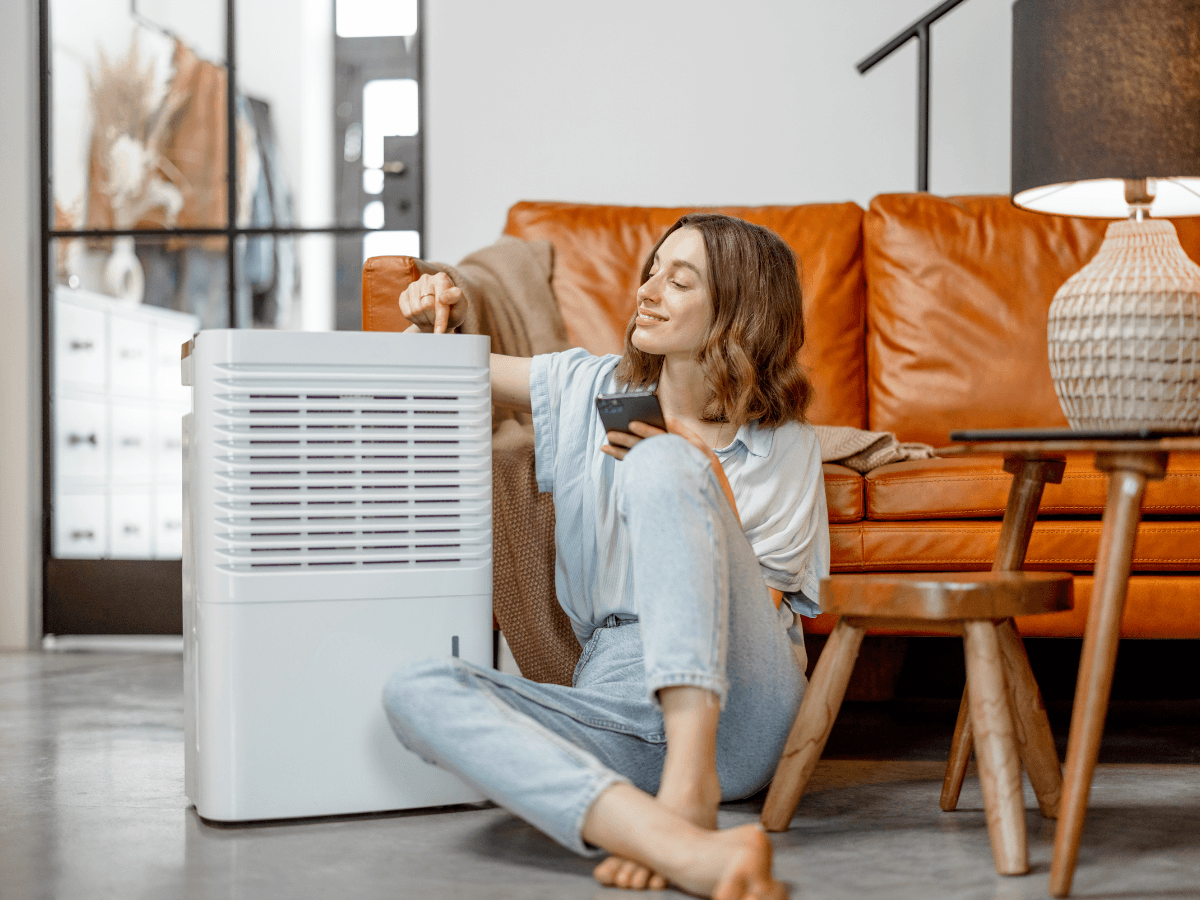
Improving indoor air does not always require new HVAC equipment. Many of the most useful first steps involve reducing pollutants at their source, cleaning the surfaces where particles settle, controlling moisture, and making sure existing filtration is working properly.
For homeowners concerned about indoor air quality Atlanta conditions can make pollen and humidity especially noticeable, these household changes are a sensible place to start before assuming the entire HVAC system needs an upgrade.
Start With the Pollutants You Can Remove Yourself
Routine cleaning matters because not every particle stays airborne long enough to reach an HVAC filter or portable purifier. Pollen, pet allergens, dust, and fibers can settle onto flooring, furniture, bedding, and other surfaces.
A vacuum equipped with a true HEPA exhaust filter can help capture fine particles rather than releasing as much collected material back into the room. Damp dusting is also preferable to aggressively dry-dusting surfaces, which can send settled particles back into the air.
If dust mites are a concern, washable bedding and allergen-resistant mattress and pillow covers can reduce exposure in the bedroom. These measures do not remove every allergen from a home, but they address sources that a central HVAC filter cannot reach.
Check the HVAC Filter Before Buying Anything Else
A dirty, incorrectly installed, or poorly fitting filter is an easy problem to overlook.
Check the filter condition and confirm that it is installed in the correct direction. Replace disposable filters when they are visibly loaded or according to the manufacturer’s recommendations. Homes with pets, heavy pollen exposure, renovation dust, or frequent HVAC use may need filters checked more often.
Do not automatically switch to the highest MERV rating available. Higher-efficiency filtration can increase airflow resistance, and the filter needs to be compatible with the system.
If you notice recurring airflow problems even with the correct filter installed, that is different from simply needing a filter change and may justify a professional inspection.
Use a Portable Air Cleaner Where It Will Matter Most
A portable purifier can be useful if the main concern is airborne particles in a bedroom, home office, or living room.
For particle removal, look for a HEPA air cleaner appropriately sized for the room. Clean air delivery rate, or CADR, is more useful than relying solely on marketing terms such as “medical grade” or “advanced purification.”
Place the purifier where air can move freely through the intake and outlet. Tucking it behind a sofa, curtain, or large piece of furniture can limit circulation.
Portable air cleaners are supplemental tools. They do not repair moisture problems, remove pollutants that remain attached to surfaces, or replace source control and ventilation.
Reduce What Comes Into the House
During periods of heavy pollen, small habits can reduce the amount tracked indoors. Removing shoes at the entrance, changing clothes after extended outdoor activity, grooming pets that spend time outside, and wiping pollen from frequently used surfaces can all help.
Kitchen and bathroom exhaust fans also deserve attention. Use them when cooking or showering if they vent outdoors and function properly. These fans address pollutants and moisture at the point where they are created rather than waiting for the central HVAC system to handle them later.
Watch for Moisture, Not Just Dust
Some indoor air concerns cannot be solved with more filtration. Persistent condensation, water stains, damp materials, recurring mold, or a musty odor should prompt a search for the moisture source. Plumbing leaks, roof leaks, condensate drainage problems, crawl-space moisture, and poor ventilation can all contribute.
HVAC equipment itself can also develop drainage problems. A clogged condensate line or overflowing drain pan, for example, can introduce moisture around the system. Understanding how hidden water and condensate problems develop around HVAC equipment can help homeowners recognize when a moisture issue deserves closer attention.
When Should You Stop Troubleshooting It Yourself?
A professional evaluation becomes more useful when the problem points to the HVAC system rather than ordinary household maintenance.
Consider having the system checked if you notice:
- Weak or noticeably reduced airflow from multiple vents
- Persistent musty odors while the HVAC system is running
- Water around the indoor unit or condensate drain
- Repeatedly high indoor humidity despite normal cooling operation
- Unusual HVAC noises or cycling behavior
- A filter that becomes unusually dirty very quickly
- Visible contamination inside accessible HVAC components
These symptoms do not automatically prove there is mold in the ducts or that the system needs replacement. They simply indicate that more diagnosis may be appropriate. Some HVAC warning signs can point to drainage, airflow, coil, filter, or mechanical problems that household cleaning will not resolve.
What About Persistent Allergy Symptoms?
Symptoms alone cannot identify an indoor air problem or its source. Sneezing, congestion, coughing, headaches, and irritation can have many causes, including medical ones.
If symptoms consistently seem worse in one room or building, it can be useful to look for environmental patterns such as pets, dampness, visible mold, fragrances, smoke, recent renovations, or unusually dusty conditions.
HVAC improvements may help with certain airborne particles, but they should not be treated as a diagnosis or medical treatment. The best approach to indoor air quality Atlanta homeowners can take is usually incremental.
Remove obvious pollutant sources, keep surfaces and filters maintained, control moisture, use targeted air cleaning where it makes sense, and bring in a professional when the problem involves equipment, drainage, airflow, or persistent conditions that simple household changes do not resolve.
Frequently Asked Questions About Indoor Air Quality in Atlanta
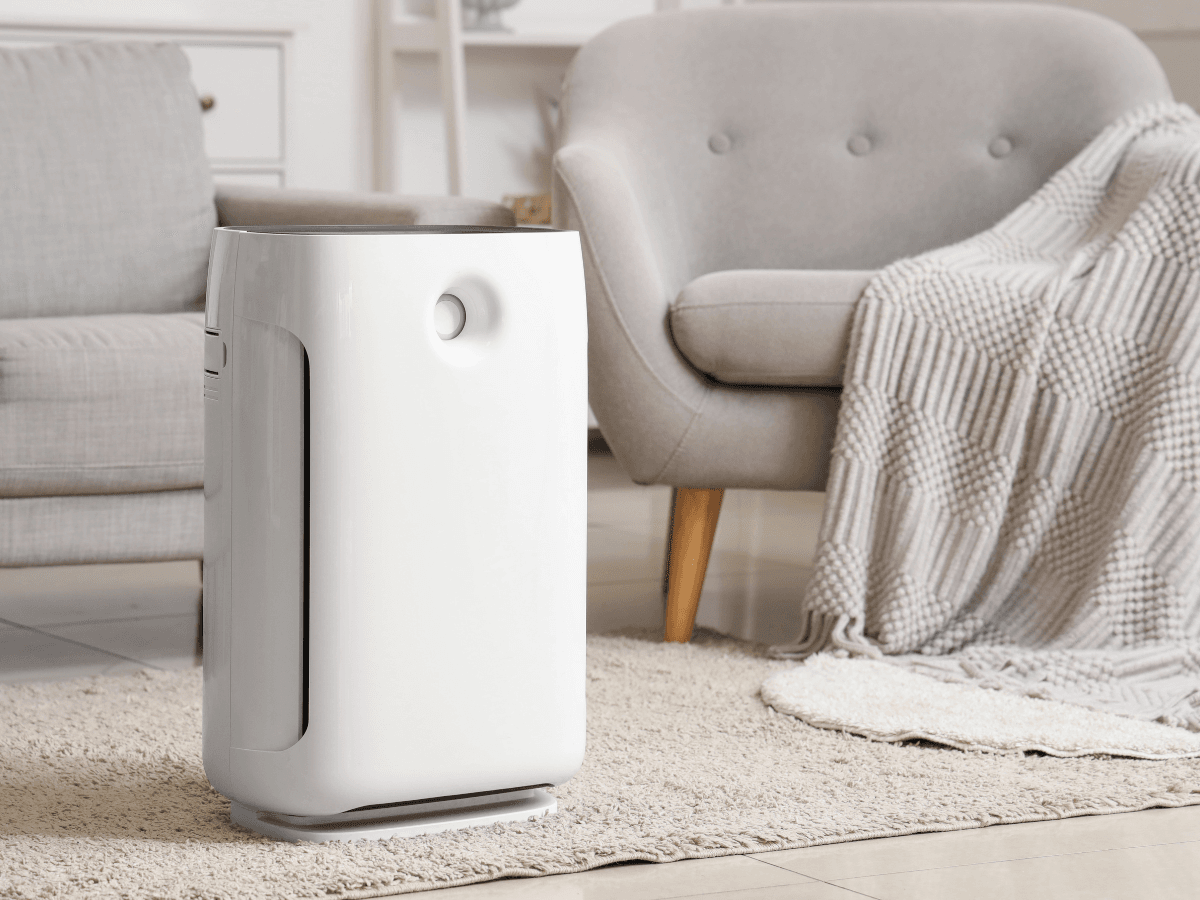
Why Can Indoor Air Quality Be Challenging in Atlanta?
Atlanta’s warm, humid climate and long pollen seasons can create conditions that make indoor air management more complicated.
Outdoor pollen can enter through doors, windows, clothing, shoes, and pets, while elevated indoor moisture can support mold growth and dust mites when humidity is not properly controlled.
That does not mean Atlanta homes automatically have worse indoor air than homes everywhere else. Indoor air quality also depends heavily on ventilation, moisture sources, cleaning habits, pets, cooking, filtration, building conditions, and HVAC performance.
For indoor air quality Atlanta homeowners can manage effectively, the first step is identifying which of those factors is actually contributing to the problem.
What Causes Poor Indoor Air Quality Inside a Home?
Indoor air can contain pollutants from both outdoor and indoor sources. Common contributors include:
- Pollen and outdoor dust
- Pet dander
- Household dust and fibers
- Mold associated with moisture
- Cooking particles and odors
- Smoke from fireplaces, candles, or tobacco
- Volatile organic compounds from some cleaners, paints, furnishings, and household products
- Dust mite and pest allergens
These pollutants behave differently, which is why no single filter or purifier can address every indoor air problem.
Does the HVAC System Cause Indoor Air Quality Problems?
It can contribute to some problems, but it should not automatically be blamed for every air-quality concern.
Dirty or poorly fitting filters, condensate drainage problems, restricted airflow, contaminated components, or improperly operating equipment can affect how air moves through the home.
However, an HVAC system cannot be expected to correct a roof leak, remove pollutants produced by cooking, eliminate pet allergens from furniture, or solve a mold problem caused by plumbing moisture.
A professional inspection is most useful when there are signs that the equipment, filtration, drainage, or humidity control may not be operating correctly.
How Often Should HVAC Filters Be Changed in Atlanta?
There is no universal replacement interval. Filter type, household size, pets, pollen levels, remodeling activity, system runtime, and other conditions all affect how quickly a filter becomes loaded.
Check the filter regularly rather than relying only on a date printed on the package. A visibly dirty filter should usually be replaced even if it has not reached the manufacturer’s maximum recommended interval.
Higher-efficiency filters can improve particle capture, but they must also be compatible with the HVAC system’s airflow requirements.
Can High Indoor Humidity Affect Air Quality?
Yes. Excess moisture can create conditions that support mold and dust mites, particularly when dampness persists on building materials, furnishings, or other surfaces.
Homeowners can monitor indoor relative humidity with an inexpensive hygrometer. If humidity remains elevated despite normal air-conditioning operation, investigate possible moisture sources rather than assuming the thermostat setting alone will solve the problem.
Plumbing leaks, bathroom ventilation, crawl-space moisture, condensate problems, and HVAC operation can all influence indoor moisture.
Can Routine HVAC Maintenance Improve Indoor Air Quality?
Maintenance can help keep the parts of the HVAC system responsible for airflow, filtration, cooling, and condensate removal operating as intended.
A maintenance visit may identify dirty filters, drainage problems, airflow restrictions, coil issues, or other conditions that could affect indoor comfort or moisture control. Seasonal HVAC maintenance can be particularly useful before periods of heavy heating or cooling demand.
Maintenance should still be viewed as one part of an indoor air strategy. Cleaning, source control, moisture management, and ventilation remain important outside the HVAC system.
Do Air Purifiers Remove Mold From a Home?
An air purifier may capture some airborne mold spores if it uses appropriate particle filtration, but it cannot remove the moisture source that allowed mold to grow.
If mold is present because of a leak, condensation, flooding, or another persistent moisture problem, that underlying condition needs to be corrected. Air cleaning can supplement remediation and moisture control, but it should not be used as a substitute for them.
How Do I Know Whether I Need Better Filtration or a Dehumidifier?
Start with the problem you are trying to solve. If the main concern is pollen, dust, or pet dander, filtration may be the more relevant starting point. If indoor humidity remains consistently high, condensation appears frequently, or the home feels clammy, moisture control deserves closer attention.
Some homes may benefit from both, but adding equipment without identifying the problem can result in unnecessary expense. Measure humidity, inspect filter condition, note when and where problems occur, and look for obvious moisture sources before choosing a solution.
Does Opening Windows Improve Indoor Air Quality?
Sometimes. Natural ventilation can help dilute indoor pollutants when outdoor conditions are favorable.
During high-pollen periods or days with poor outdoor air quality, however, opening windows can bring additional pollutants inside. Atlanta homeowners should consider pollen, outdoor air quality, temperature, and humidity rather than following a fixed rule throughout the year.
Where Does inAir Provide HVAC Services?
inAir lists service areas throughout Metro Atlanta, including Acworth, Alpharetta, Brookhaven, Buckhead, Decatur, Johns Creek, Kennesaw, Marietta, Roswell, Sandy Springs, Smyrna, Suwanee, and several other communities.
Homeowners can check the complete list of Metro Atlanta HVAC service areas before scheduling an evaluation.
When Should I Call an HVAC Professional About Indoor Air Quality?
Consider professional HVAC evaluation when the problem appears connected to the heating and cooling system rather than normal household cleaning.
Examples include persistent high humidity during cooling operation, weak airflow, water around the indoor HVAC unit, recurring musty odors when the system runs, unusual filter loading, or concerns about whether a higher-efficiency filtration system is compatible with the equipment.
The most effective approach to indoor air quality Atlanta homeowners can take is to match the response to the source. Filters address airborne particles, dehumidification addresses excess moisture, ventilation helps manage certain indoor pollutants, and repairs address mechanical problems.
Knowing which problem you actually have prevents unnecessary equipment upgrades and usually leads to a more useful solution.
Conclusion
Improving indoor air quality in Atlanta starts with addressing the everyday factors that affect the air circulating throughout your home.
Regular HVAC maintenance, appropriate filtration, humidity control, proper ventilation, and attention to common indoor pollutants can all contribute to a cleaner, more comfortable living environment.
Because every home’s HVAC system and air quality concerns are different, professional evaluation can help identify practical improvements tailored to your space.
For professional indoor air quality Atlanta solutions and dependable HVAC service, choose inAir Heating & Air. If you’re ready to improve the air quality and comfort in your home, call (770) 233-7777 to speak with the team at inAir Heating & Air or fill out the website form to submit your HVAC request today.